Colores de Abundancia · Chinchero Weaving Project
Augusta
Pumacahua
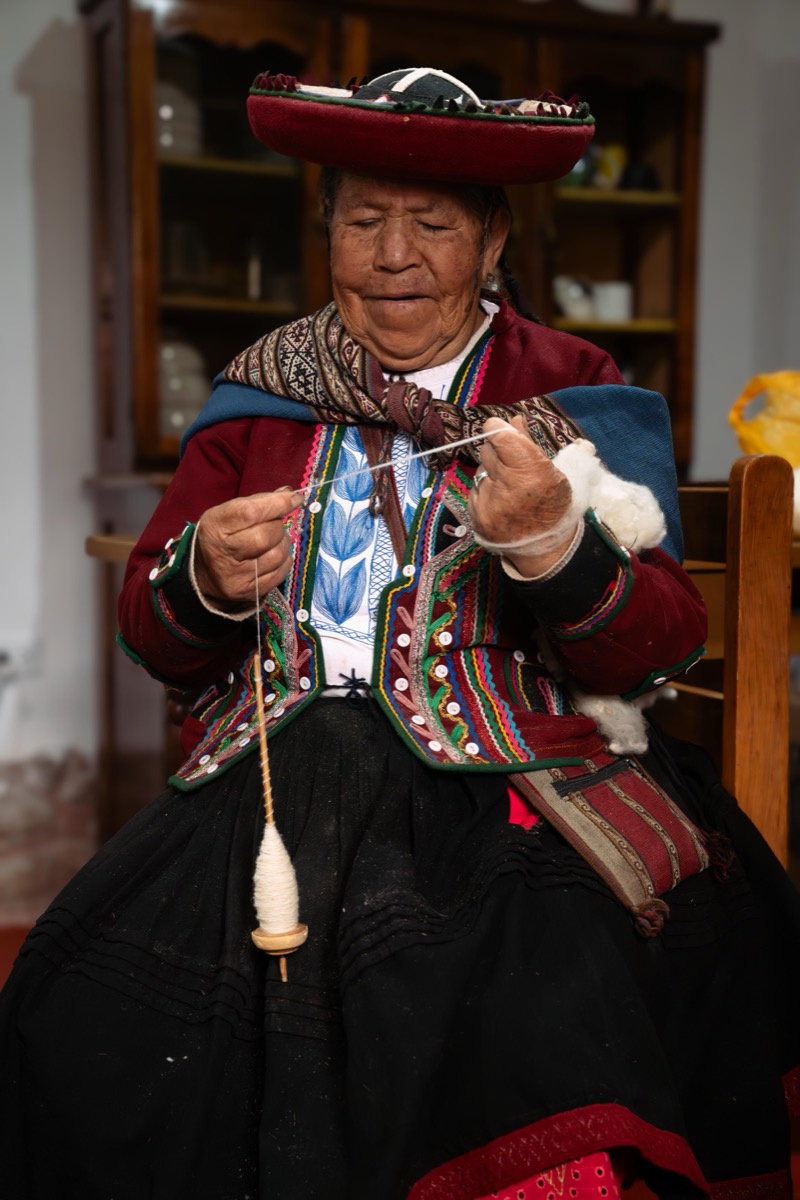
Master weaver, teacher, and keeper of Andean textile traditions whose practice weaves together ancestral knowledge and living culture.
"Each color carries a meaning. Red honors Pachamama — the Earth. Yellow honors Tayta Inti — the Sun. When I weave, I am not just making cloth. I am telling the story of where I come from."
— Augusta Pumacahua Pumayali
Colores de Abundancia
Biography
A life woven in tradition
Augusta Pumacahua Pumayali was born and raised in Chinchero, a small community in the Sacred Valley of the Inca, at more than 3,700 meters above sea level. Chinchero is one of the last places in Peru where traditional Andean backstrap weaving — developed over thousands of years — continues as an unbroken living practice.
She learned to weave from her grandmother at a young age, absorbing not just technique but the cultural philosophy behind each design. Over decades of practice, Augusta developed mastery of the most complex jakima (jaquima) patterns, each of which carries layers of symbolic meaning rooted in Andean cosmovision.
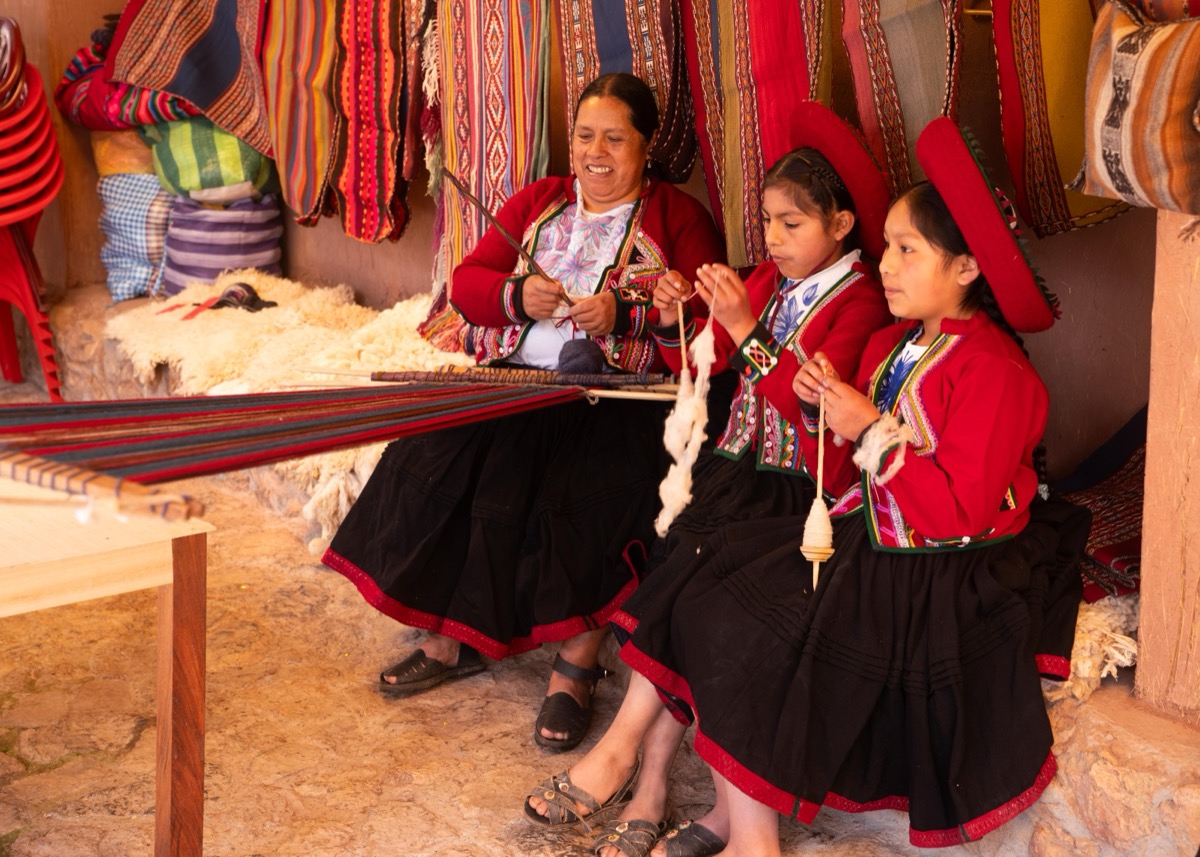
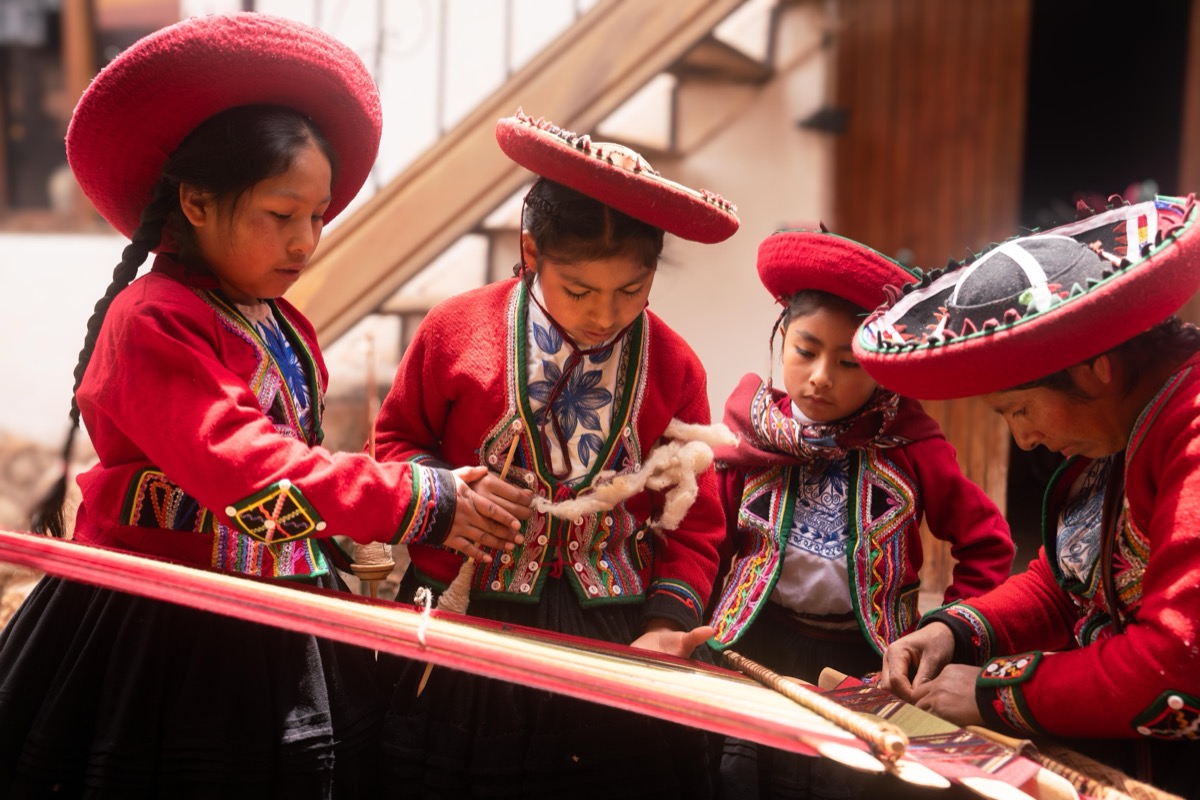
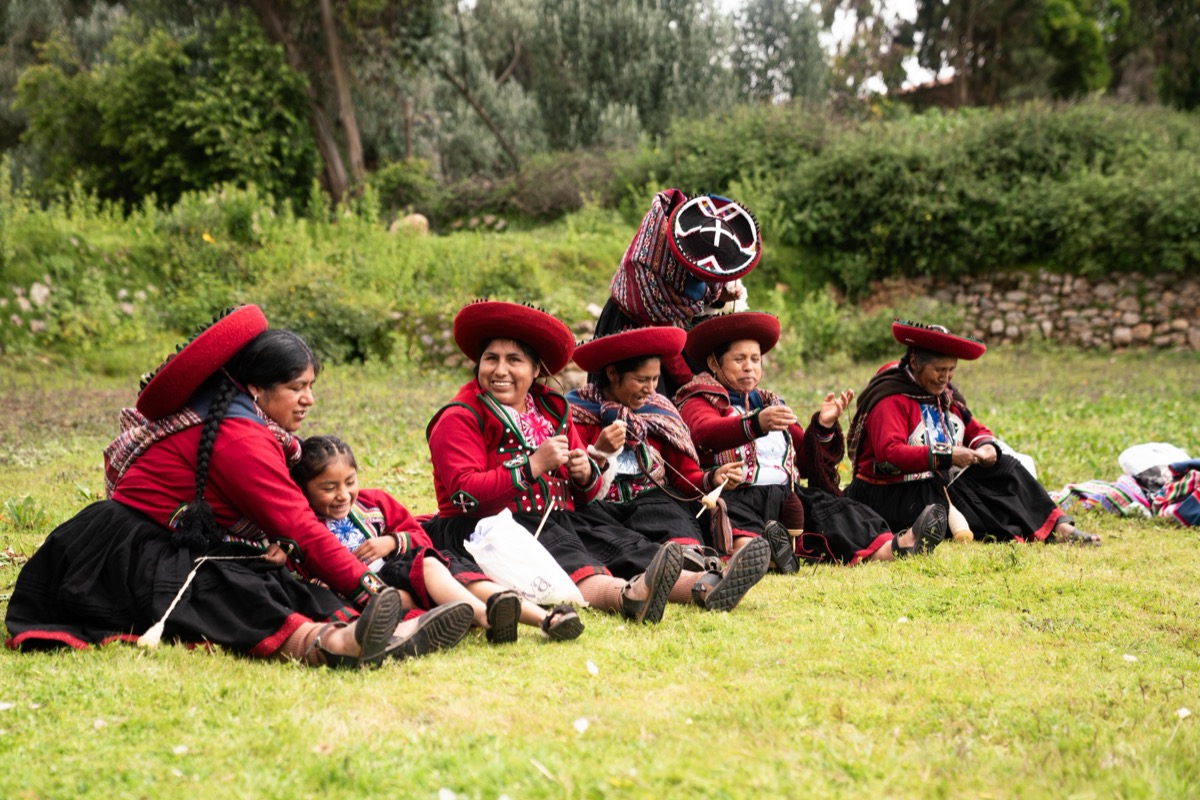
Today Augusta is both a practicing weaver and a teacher. Through the Chinchero Weaving Project — supported by Colores de Abundancia and the Waterman Foundation — she leads weekly classes where students learn not only the physical craft of weaving but the stories, histories, and beliefs that give each design its meaning. Her teaching is rigorous and deeply personal: she frequently draws on her own journey as a weaver, sharing the struggles and breakthroughs that shaped her.
For Augusta, the act of weaving is inseparable from the land, the seasons, and the community. "The plants give us the dyes. The earth gives us the wool. The sun gives us the light. Nothing in this work is separate from where it comes from," she has said. This understanding — that craft and place are one — is at the heart of everything she teaches.
The Work
Techniques & Traditions
One of the foundational designs of Chinchero weaving. The Tankachuro (also Tancachuro) is a complex interlocking pattern that students learn early in their training. Mastering it builds the dexterity needed for more advanced designs.
Inspired by the Andean cross, Chiñipuyto is a foundational pattern that becomes a building block for more elaborate compositions. Augusta describes it as "the seed of many other designs" — once mastered, it unlocks the logic of Chinchero textile grammar.
An advanced weaving pattern taught once students have command of the foundational designs. Mayuqenko requires sustained concentration and a deep understanding of thread tension and color harmony — skills built through months of progressive practice.
Before weaving begins, the warp must be set on the loom with absolute precision. Augusta teaches urdido (warping) as a practice in its own right — requiring patience, spatial thinking, and an eye for color balance that informs the final piece.
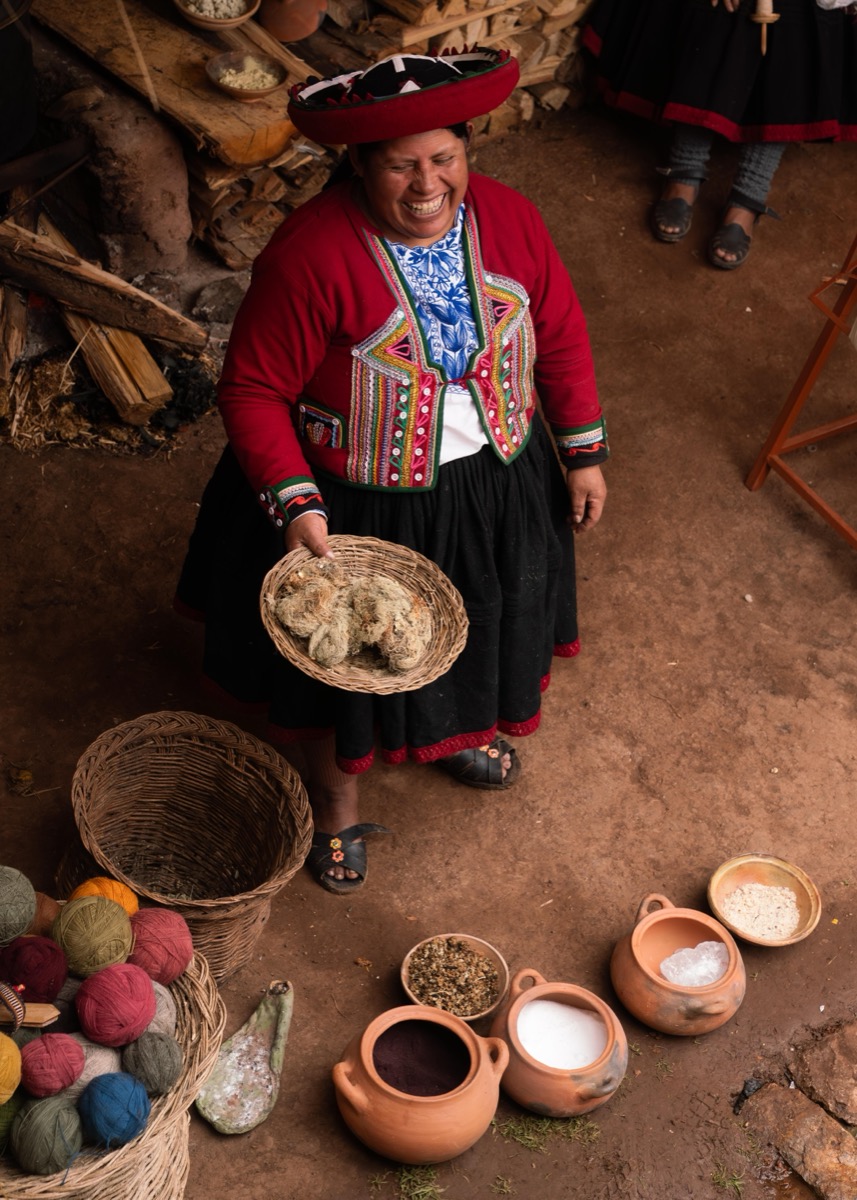
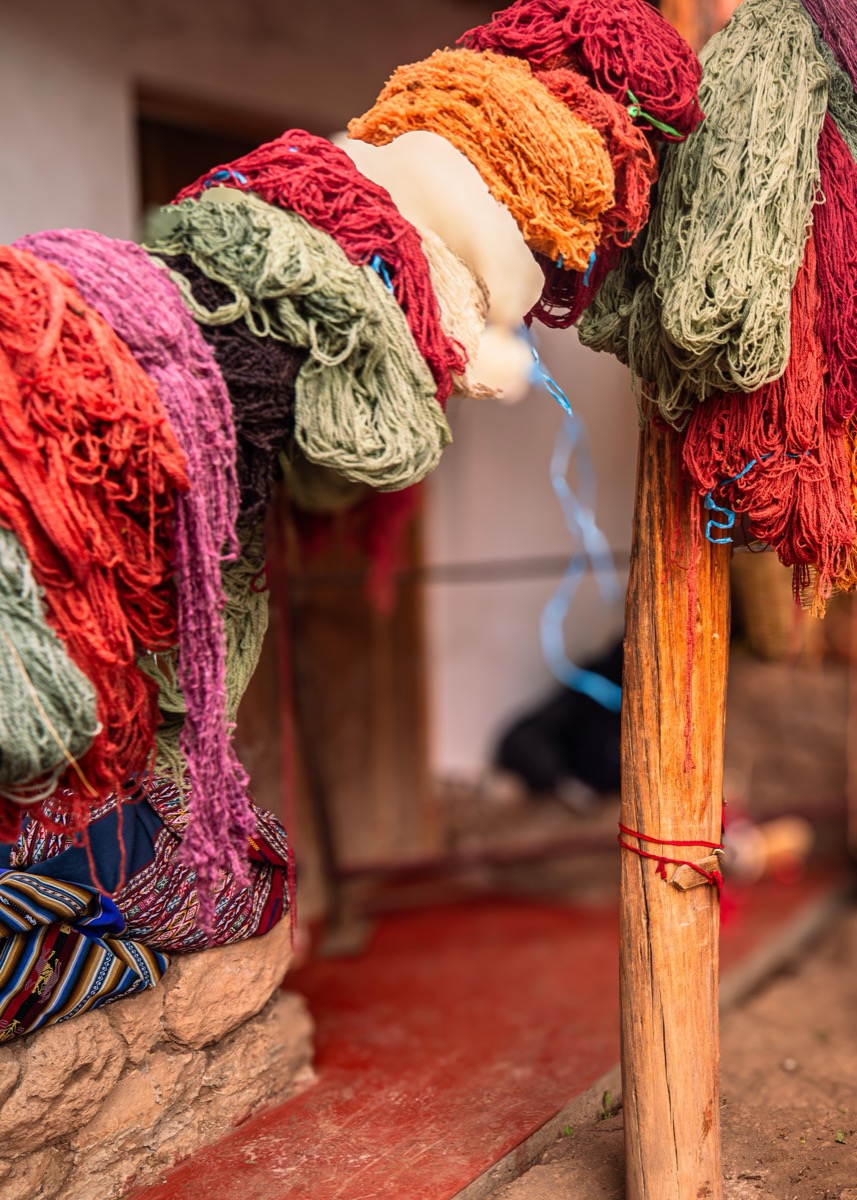
Augusta teaches the use of locally sourced plants to create dyes — reds, yellows, greens, and blues drawn from the landscape surrounding Chinchero. The process connects students to the Andean environment and to centuries of sustainable craft knowledge.
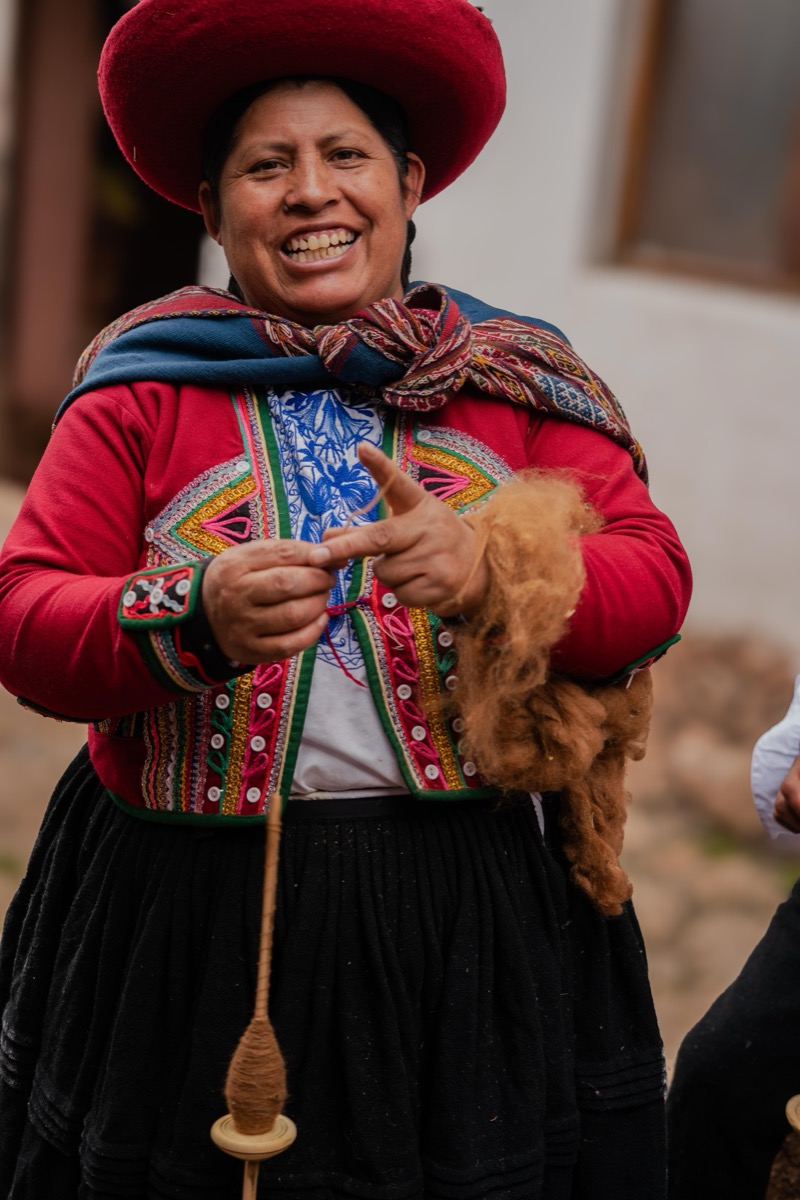
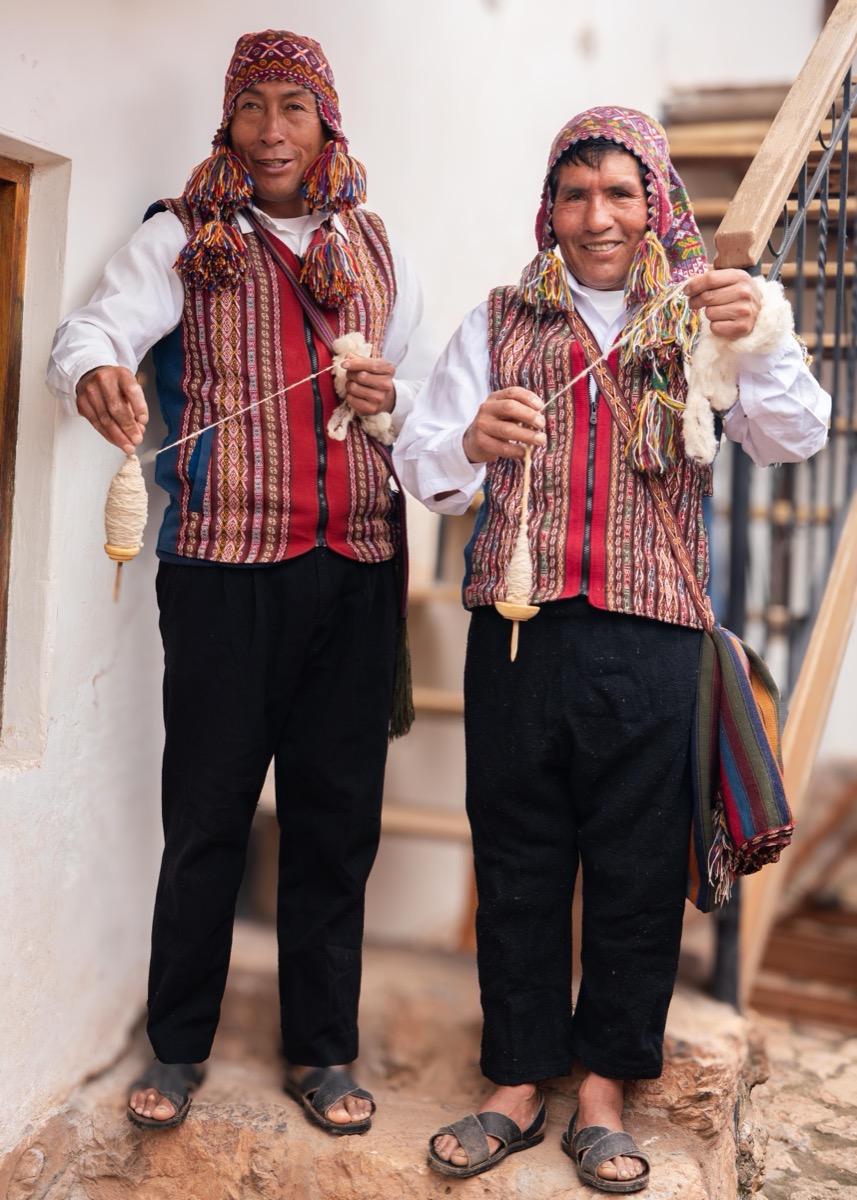
The spinning and twisting of wool into fine, even thread. Torcelado is taught as a foundational skill — the quality of the finished weaving depends entirely on the consistency of the thread. Augusta emphasizes that this preparatory work is inseparable from the craft itself.
Color & Cosmovision
What the colors mean
In Andean textile tradition, color is cosmological. Augusta teaches that the selection of color in a piece is a form of prayer — an acknowledgment of the forces that sustain life in the high Andes.
Red — Pachamama
Red honors Pachamama, the Earth Mother. It represents fertility, life, and the sustaining power of the land. In Chinchero textiles, red is among the most prominent and sacred colors, frequently woven into jakimas and ceremonial pieces.
Yellow — Tayta Inti
Yellow honors Tayta Inti, the Father Sun — the source of warmth, growth, and the agricultural cycle. Sun imagery and sun-derived colors are woven throughout the designs Augusta teaches, reminding students that all craft begins with light.
Gallery
The craft in practice
Photographs from the Chinchero Weaving Project — coming soon. Images will be added as the project documentation is completed.
More artists, more traditions
Augusta is one of many master artisans working with Colores de Abundancia to preserve Peru's living cultural heritage.