Colores de Abundancia · Shipibo Konibo
Olga
Morí Diaz
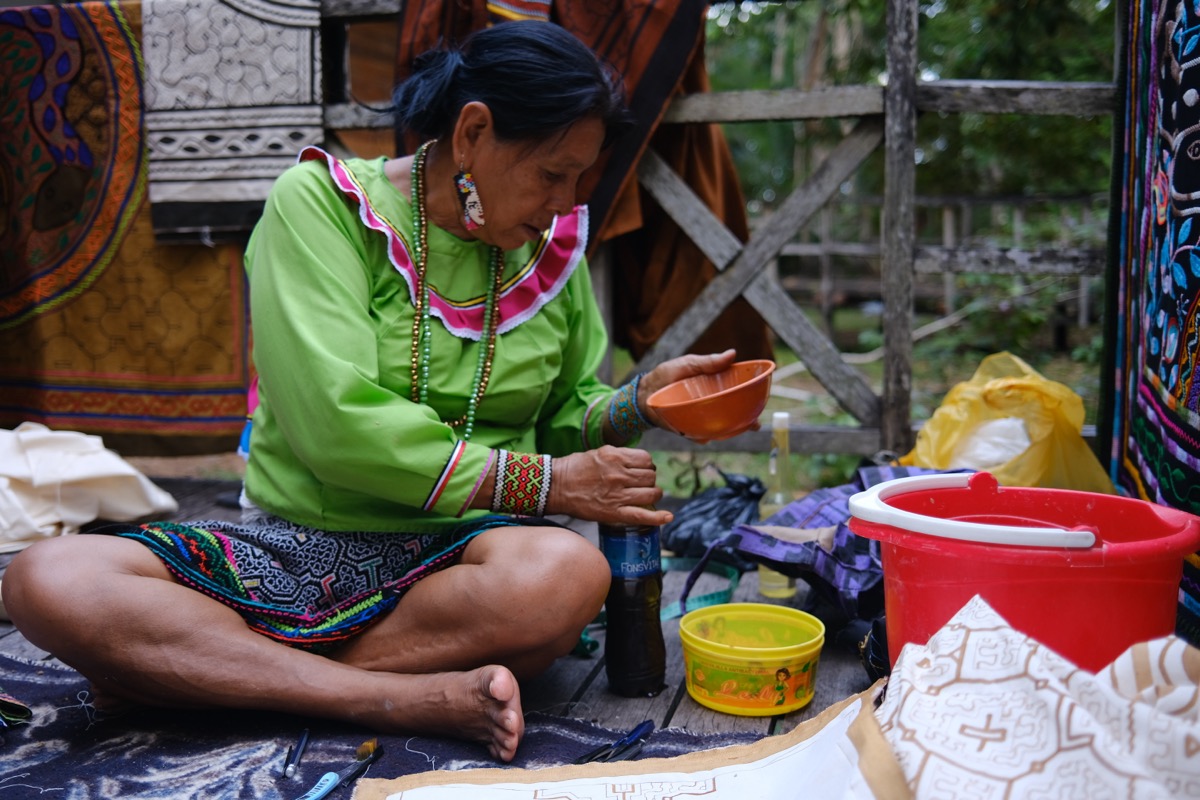
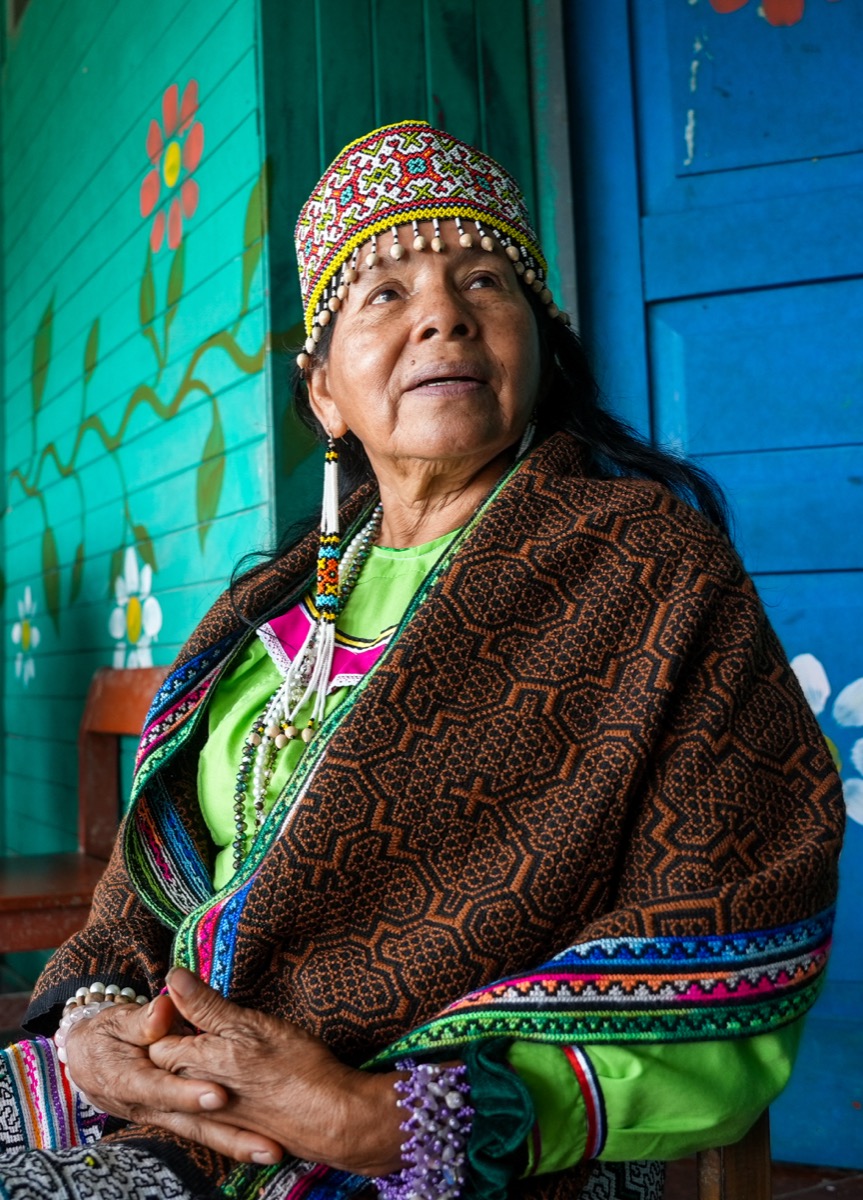
Master artisan, healer, and muralist whose kené designs carry the ancestral knowledge of the Shipibo Konibo people of the Peruvian Amazon.
"For me, artesanías are not just objects — they are a way of expressing my culture and my knowledge as a Shipibo Konibo woman."
— Olga Morí Diaz
Pucallpa, Peru
Biography
Keeper of the kené
Olga Morí Diaz was born in the Comunidad Nativa de Calleria in Pucallpa, Peru, and belongs to the Shipibo Konibo people — one of the indigenous nations of the Peruvian Amazon whose culture, language, and visual traditions have persisted for centuries in one of the world's most biodiverse regions.
From childhood, she learned from her grandparents and family the customs and traditions of her people. That learning was not abstract: it was embodied in the work of her hands, in the kené designs she began drawing before she fully understood their meaning, and in the healing knowledge passed to her through her lineage.
Today, at 66, Olga works as a master artisan, a curandera (traditional healer), and a muralist. These roles are not separate in her view — each is an expression of the same responsibility: to know what her ancestors knew, to practice it fully, and to make sure it does not disappear.
Through Colores de Abundancia, Olga's work and knowledge are shared with new audiences — in classrooms, in exhibitions, and through the documentation of artisan practice that the program makes possible. Her artesanías and painted textiles bring the visual language of the Shipibo Konibo into view for those who have never seen it, and into the hands of those learning to continue it.
The Work
Practice & Tradition
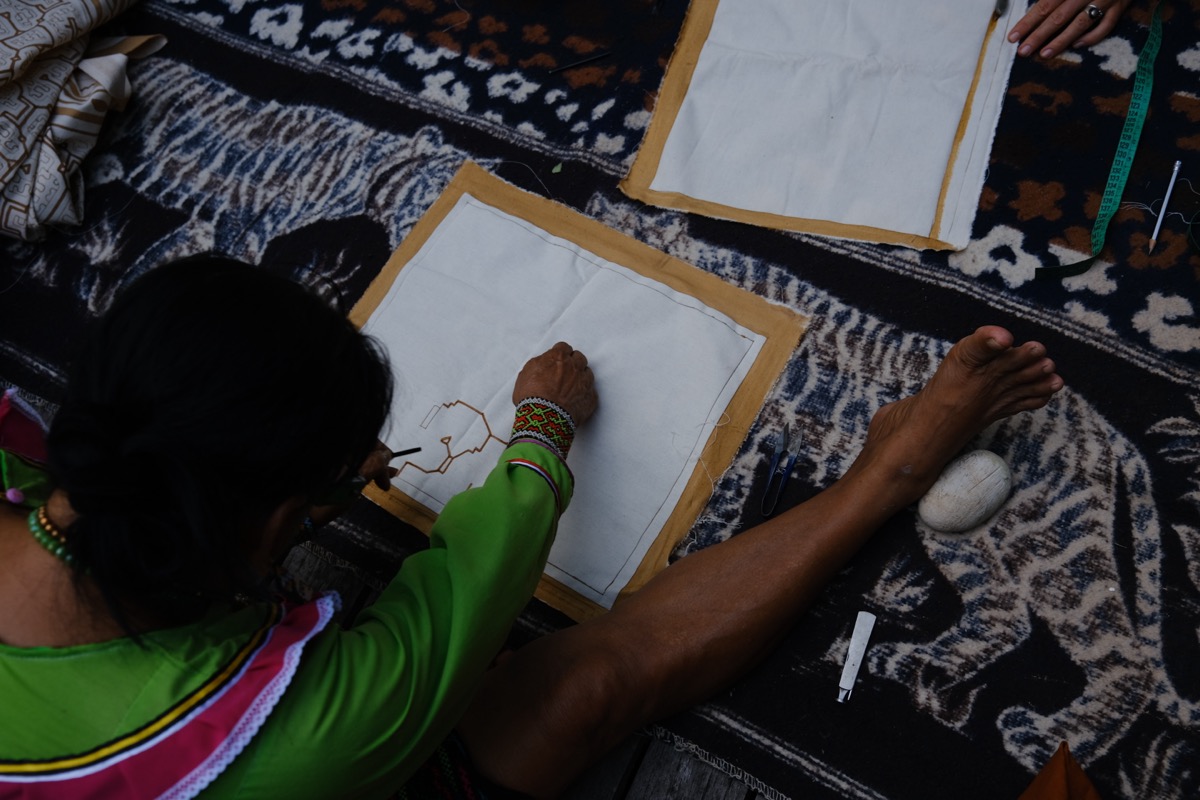
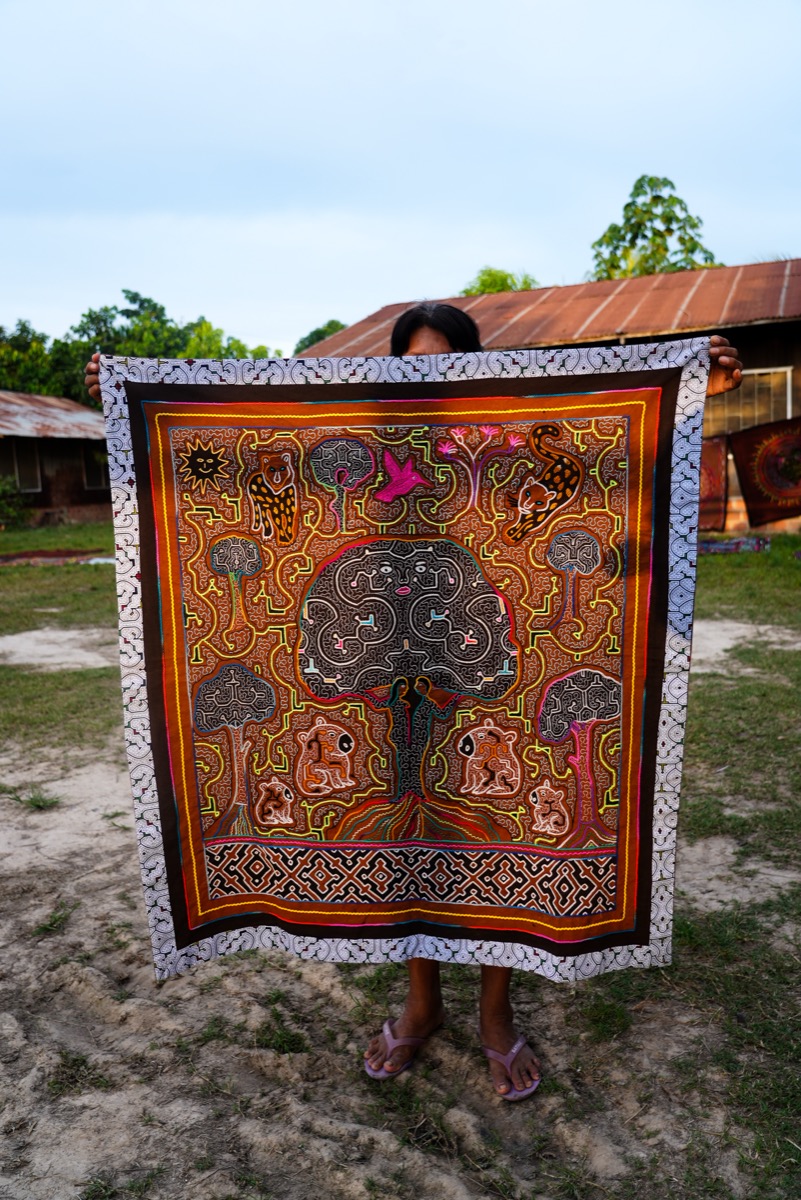
Kené are the intricate geometric patterns at the heart of Shipibo Konibo visual culture. For Olga, each design is not decoration but language — encoding ancestral knowledge, spiritual meaning, and a way of understanding the world. Every line is intentional, drawn from memory and from learning passed through generations.
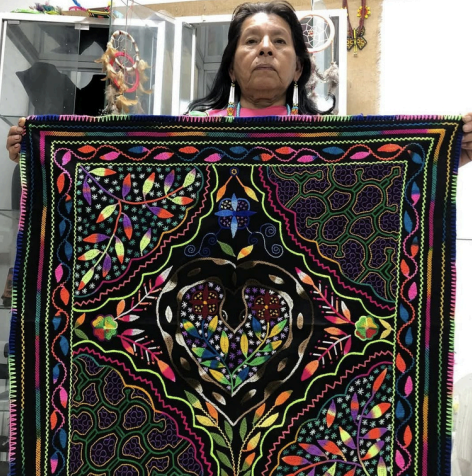
Olga's painted textiles are among her most significant works. On large cloth surfaces, she renders the kené in its fullest form: patterns that represent the paths of life, the energy of nature, and the balance of the world. Each piece is both an artwork and an archive of ancestral knowledge made visible.
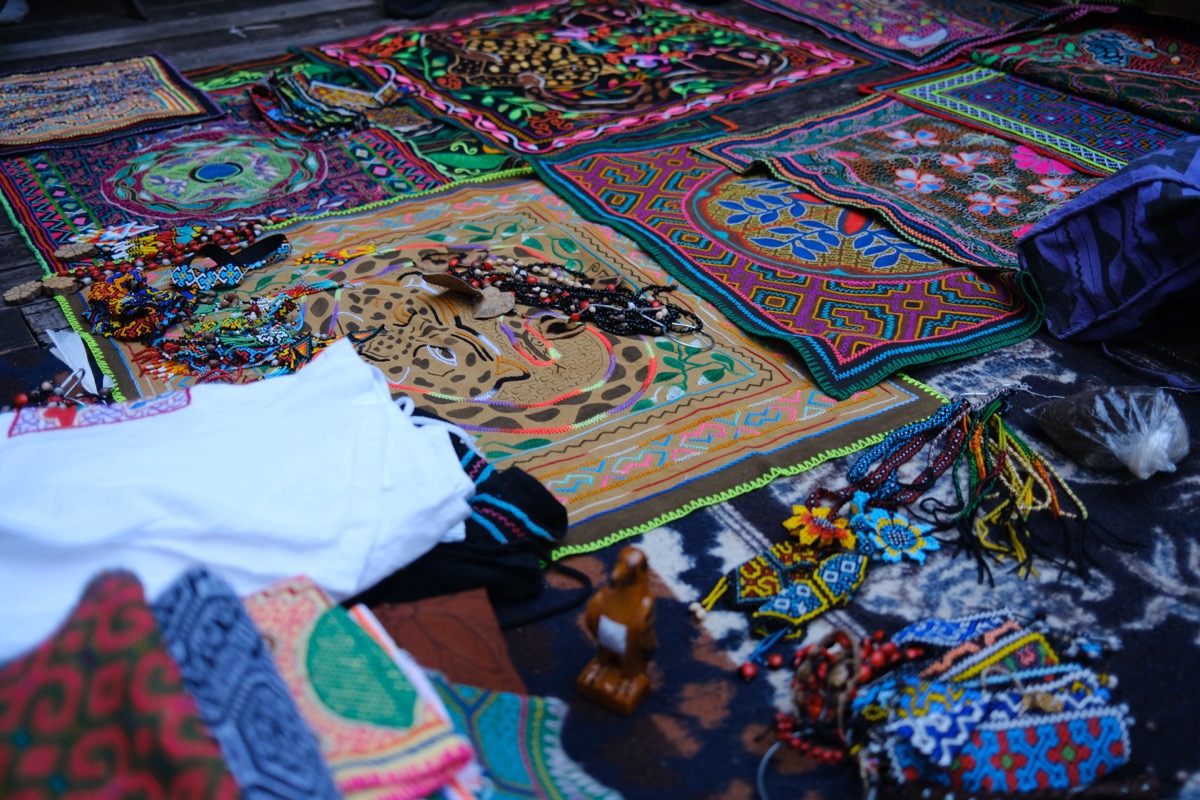
Beyond textiles, Olga creates a wide range of handcrafted objects — each bearing kené designs that express Shipibo Konibo identity and cosmovision. These objects carry cultural meaning that goes far beyond their material form, serving as living expressions of a way of seeing and inhabiting the world.
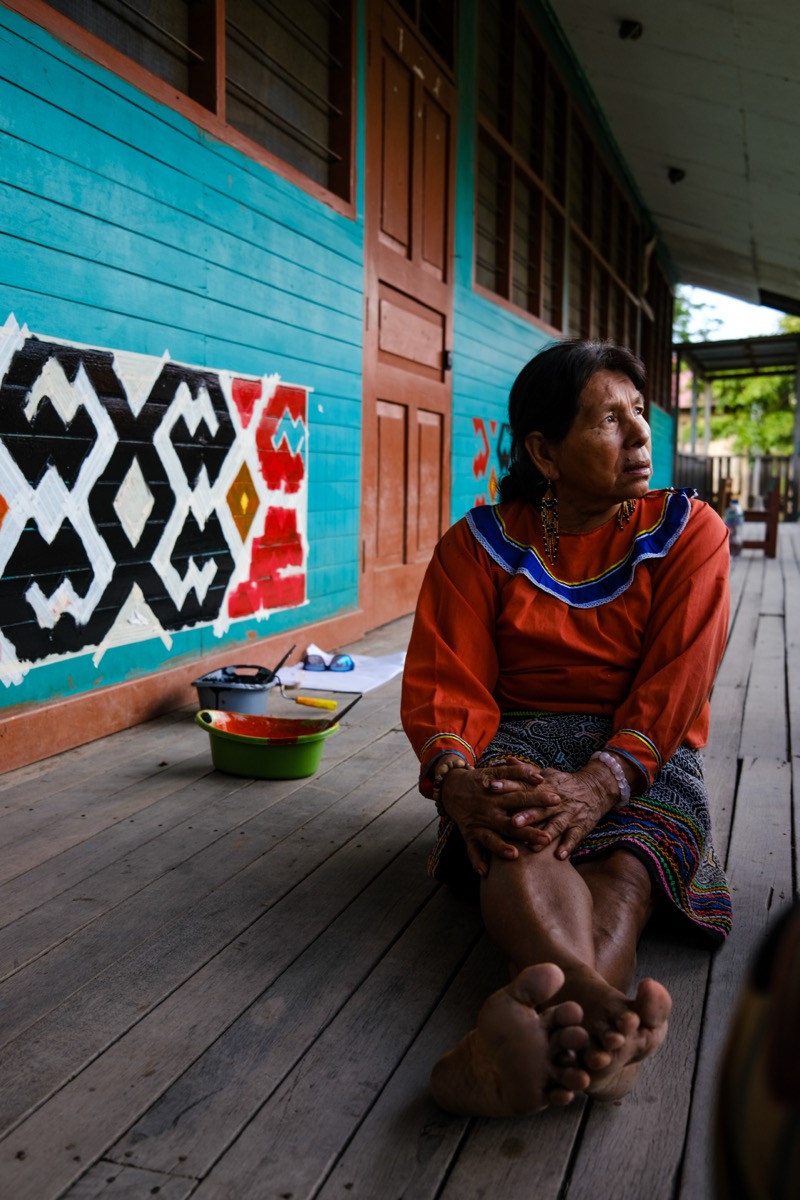
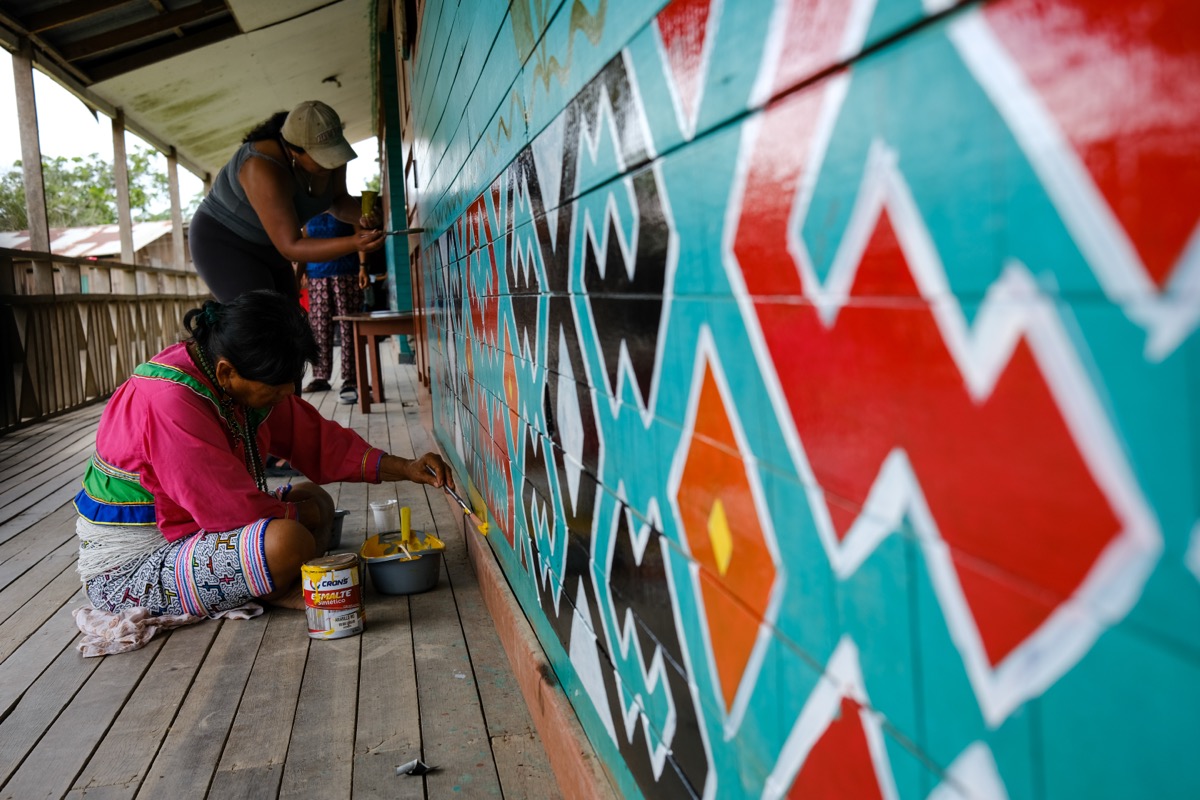
Olga's practice extends into large-scale muralism, bringing Shipibo Konibo visual culture into public space. Her murals carry the same kené vocabulary as her textiles and objects, translated into a form that communities and passersby encounter directly — an act of cultural presence in the landscape itself.
As a curandera, Olga holds traditional healing knowledge developed over generations within the Shipibo Konibo tradition. This practice is inseparable from her work as an artisan: both draw on the same ancestral understanding, the same connection to the natural world, and the same responsibility to transmit what she has received.
For Olga, making and teaching are a single act. Through her work with Colores de Abundancia, she shares not only technique but the cultural philosophy behind each design — ensuring that the traditions of the Shipibo Konibo people continue to be practiced, valued, and understood in Peru and in the world.
What the Kené Carries
Paths of life
In Shipibo Konibo tradition, the kené patterns drawn on textiles, ceramics, and the body are a visual cosmology — a map of how the Shipibo Konibo people understand the forces that animate the world.
The paths of life
The meandering lines of kené represent the paths of life — the winding, interconnected routes through which energy, time, and spirit move. No two kené designs are identical; each path is unique to the maker and the moment of its creation.
The energy of nature
Geometric forms within kené designs reflect the energy of the natural world — rivers, plants, animals, and the patterns found in the Amazon environment. For Olga, drawing kené is a way of acknowledging and honoring the living world around her.
Teaching & Community
The tradition, passed on
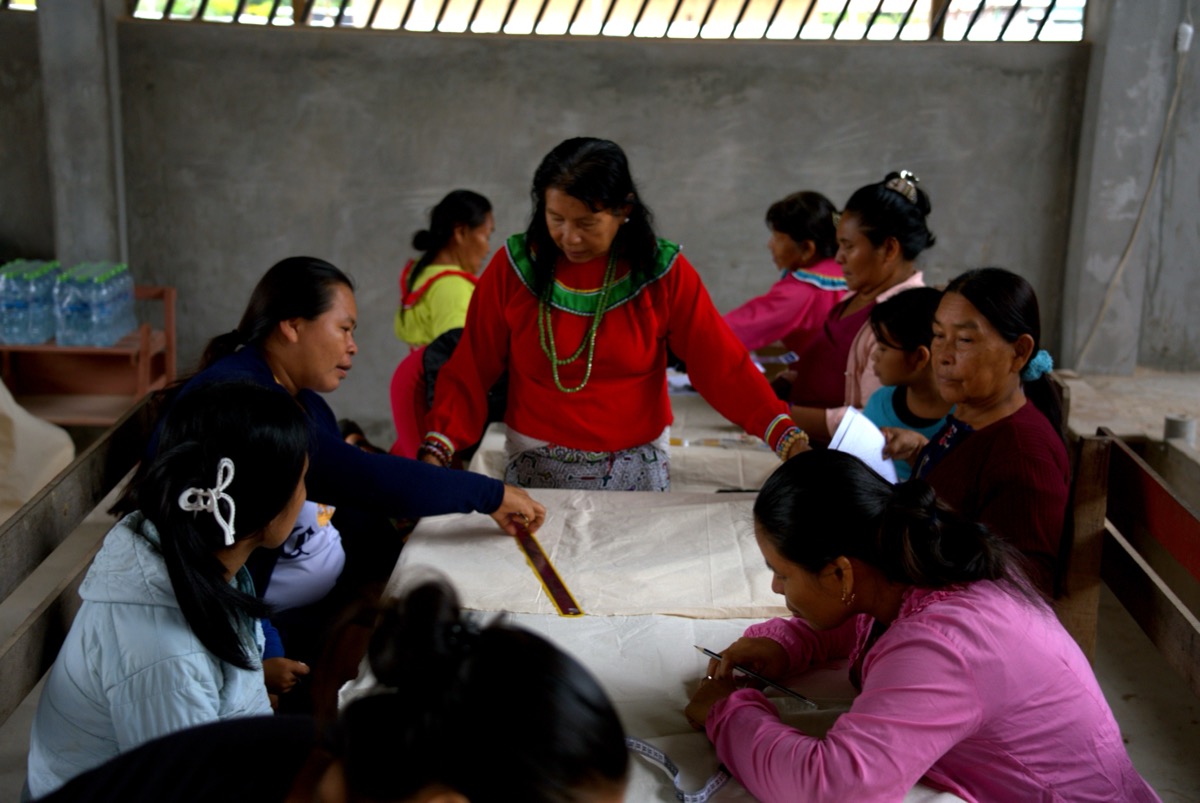
Through Colores de Abundancia, Olga passes the kené tradition to the next generation — teaching not only technique, but the cultural knowledge and cosmovision woven into every design.
Students at work — kené workshop, Calleria
Olga teaching — Colores de Abundancia
Gallery
The work in practice
Photographs of Olga's artesanías, telas pintadas, and murals — images will be added as documentation is completed.
Colores de Abundancia
More artists, more traditions
Olga is one of many master artisans whose work and knowledge are supported through Colores de Abundancia.